
Read Carry Share
The Pocket Testament League (PTL)Lifestyle
3.337.00 Reviews
- Version
- 9.0.5
- Installs
- 10.00M
- Age Rating
- Everyone
Screenshots
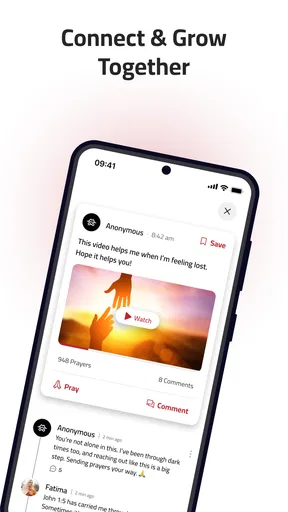
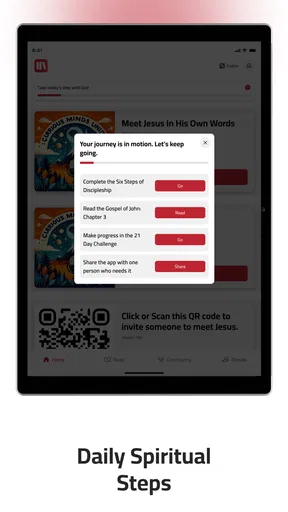
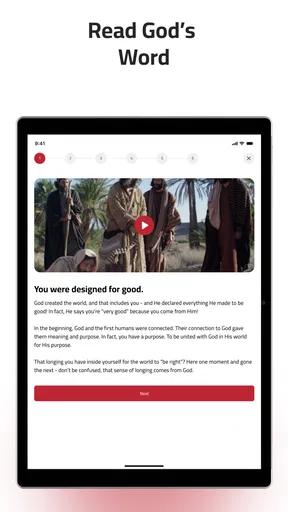
Our Review of Read Carry Share
 Analysis by Appyee
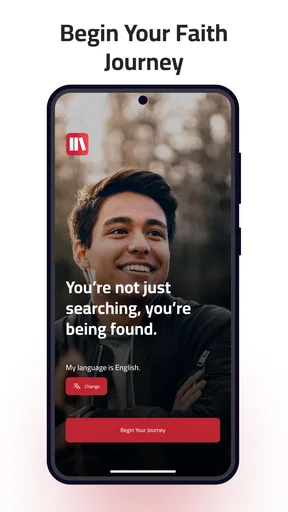
Read Carry Share is a free lifestyle app from The Pocket Testament League, built around a simple idea: read the words of Jesus, carry them with you, and share them with other people. I found its appeal strongest when I treated it less like a general Bible app and more like a focused tool for personal reading and faith conversations. It is not trying to replace every devotional, study, or church resource on a phone. Its value comes from keeping one purpose in view.
That focus makes the first impression easy to understand. The app’s store summary describes its mission as helping users share Jesus in his own words, while the short description reduces the experience to “Read Carry Share.” Those phrases are brief, but they accurately frame the product. You are not opening it primarily for productivity, entertainment, or broad lifestyle tracking. You are opening it because you want a compact way to engage with the Gospel and possibly pass that experience on.
In my experience, that narrow purpose is both the app’s main strength and its biggest limitation. Someone who already wants a straightforward Christian reading companion can settle into it quickly. Someone looking for extensive study tools, a large library of translations, detailed notes, or a highly customizable devotional system may find the experience too limited. The important question is not whether it does everything; it is whether its central habit remains useful after the initial curiosity disappears.
What the first week feels like
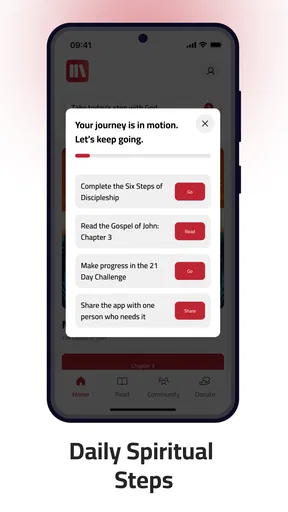
The first week is where Read Carry Share makes its clearest case for itself. A focused app can remove the hesitation that sometimes comes with opening a much larger Bible platform. Instead of deciding among study plans, reading schedules, commentaries, audio options, and social features, I can approach the app with one immediate intention: spend time with Jesus’ words and consider how I might share them.
That simplicity is especially helpful for a new or returning reader. If you have tried to build a reading habit before and abandoned it because the surrounding tools became distracting, a more direct experience can feel refreshing. The app’s identity does not depend on turning Bible reading into a complicated project. It encourages a small, repeatable action, which is often more realistic than promising yourself an ambitious plan you will not maintain.
A realistic everyday use case would be a quiet moment before work. I might open the app while drinking coffee, read a passage, and sit with one idea rather than rushing through a long study session. Later, if a friend is dealing with something related to that passage, the sharing purpose gives the reading a natural next step. I do not need to prepare a sermon or produce a polished explanation. I can simply point someone toward the words that affected me.
That workflow is one of the less obvious strengths here: the reading and sharing intentions support each other. Many Bible apps are excellent for private study but leave the social step entirely to the user. Read Carry Share keeps the possibility of sharing close to the reading experience. For someone who wants faith to move beyond a private screen, that can make the app feel more purposeful than a standard digital text.
There is also a psychological advantage to the app’s compact mission. When an application is designed around one recurring behavior, I spend less time deciding how to use it. That matters during the first week, when habits are fragile. I am more likely to return to a tool that gives me a clear reason to open it than one that offers dozens of options without helping me choose among them.
Still, the first-week appeal can be stronger than the long-term experience if I mistake novelty for usefulness. The idea of reading and sharing is attractive, but a slogan alone cannot create a lasting routine. The app needs to fit naturally into the way I already pray, read, and communicate. If it becomes an occasional inspirational item rather than part of a real rhythm, its initial clarity will not be enough.
Who benefits most at the beginning
I would recommend trying it first to Christians who want a simple companion for reading the words of Jesus, people who are beginning to explore Christianity, and users who feel overwhelmed by feature-heavy Bible applications. It can also suit someone who wants a gentle prompt to make personal reading more outward-looking rather than keeping every spiritual experience private.
It is less convincing during the first week for readers who need advanced study depth. If your normal routine depends on comparing translations, marking up extensive notes, following scholarly references, listening to long-form teaching, or organizing a detailed reading archive, this app should probably sit beside your main Bible tool rather than replace it. The focused design is useful only if the focus matches your needs.
The age rating of Everyone makes the app approachable for a broad audience, but that does not mean every family will use it in exactly the same way. A parent may appreciate a simple reading prompt, while a more experienced student of Scripture may want a separate resource for context and interpretation. I see it as an accessible starting point, not a complete answer to every biblical question.
Does it keep earning space after the first month?
The month-to-month value depends on whether I use Read Carry Share as a habit anchor. Its lasting role is not likely to come from constant discovery of new entertainment or endless customization. Instead, the app has to earn its place through repetition: opening it regularly, reading with attention, and allowing the sharing purpose to influence real conversations.
That is a worthwhile test because many lifestyle apps become clutter after the first burst of enthusiasm. A reading tool survives when it supports a behavior I genuinely want to repeat. Here, the recurring value is tied to a simple cycle. I read, reflect, carry the message into the day, and share when an appropriate opportunity appears. The cycle is modest, but modest routines are often easier to preserve.
One practical tip is to connect the app to an existing transition instead of relying on motivation. I would use it after breakfast, before a commute, or during a regular quiet period. The point is not to turn every opening into a large spiritual session. A short reading that actually happens is more valuable than an elaborate plan that remains untouched. The app’s focused purpose works best when I give it a dependable place in my day.
A second useful approach is to separate reading from performance. The sharing element can create pressure if I assume every reading must immediately become a conversation or a persuasive message. I found the healthier interpretation to be more flexible: read first, notice what stays with me, and share naturally when it serves the person I am speaking with. That keeps the app from feeling like a task-management system for evangelism.
This distinction matters for long-term use. If I measure success only by how often I convince someone else to engage, fatigue will arrive quickly. If I measure it by whether the app helps me return to Jesus’ words and become more prepared for honest conversations, the habit becomes more sustainable. The app can support a social purpose without making every interaction feel forced.
Its popularity suggests that the concept has reached a substantial audience: the Android listing shows over ten million installs and an average rating of 3.3 from around twenty thousand ratings. I would read those numbers as evidence of broad interest, not as a guarantee that every user will find the experience equally satisfying. The rating especially suggests a mixed reception, so I would approach it with realistic expectations rather than assuming the app will suit every Christian reader.
How it compares with ordinary alternatives
Compared with a printed Gospel, Read Carry Share is more convenient to keep nearby and easier to bring into a spontaneous conversation. A physical book can feel calmer and less distracting, though, and some people will prefer the deliberate pace of turning pages. I would choose the app when portability and immediacy matter, and paper when I want a screen-free reading environment.
Compared with a large Bible app, this product’s advantage is concentration. A full-featured Bible platform may offer more depth, broader navigation, and a stronger research workflow. Read Carry Share is more appealing when I want fewer decisions and a clearer connection between reading and sharing. The trade-off is obvious: the broader app is usually the better primary study environment, while this one can be the better focused companion.
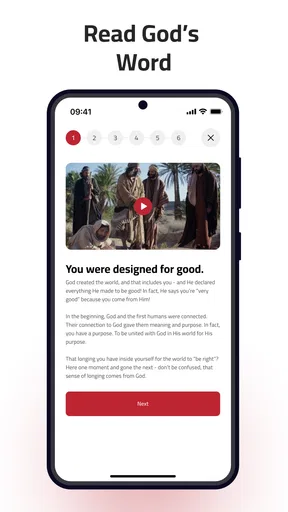
Compared with a devotional app, the distinction is also important. Devotionals often guide the reader through commentary, prompts, or a themed meditation. Read Carry Share centers the experience more directly on Jesus’ words and the possibility of sharing them. That can feel less interpretive and more immediate, but users who need daily explanation or structured reflection may prefer a devotional format.
For someone already satisfied with a church reading plan, the app may not add enough to justify becoming the main tool. I would keep it if it makes the personal-to-conversational step easier. If it merely duplicates passages I already read without changing how I engage with them, another app or a physical Bible may be the more sensible choice.
The maintenance burden is small, but the habit is not automatic
From a maintenance perspective, the app is easier to justify than many lifestyle downloads because its purpose does not require constant administration. I do not need to build a complicated database, manage a large collection, or maintain a detailed productivity system just to receive value from it. The real maintenance burden is behavioral: remembering to return and keeping the practice honest.
That is an important difference. Some apps create work around the activity they are supposed to support. Read Carry Share can remain lightweight if I resist turning it into another project. I would avoid setting an unrealistic expectation that every session must be long, perfectly focused, or followed by a carefully prepared share. A sustainable routine should leave room for busy days and changing energy levels.
One of the most useful ways to maintain the habit is to prepare a simple personal rule before using the app. For example, I might decide that each session ends with one sentence I want to remember. That sentence can stay private, become a prayer, or become the starting point for a conversation. This creates a bridge between reading and daily life without inventing extra work or forcing a public response.
Another tip is to use the app during moments when I would otherwise scroll without purpose. That does not mean treating Scripture as filler. It means noticing that a phone already occupies certain parts of the day and choosing a more intentional use for one of those moments. The app is most valuable when it replaces a competing habit, not when I add it to an already overloaded schedule.
The current version is 9.0.5, and the app runs on Android 7.0 or later. That makes it usable on a range of older Android devices, which is helpful for readers who do not upgrade phones frequently. I would still judge the experience on the specific device in hand, especially if it is older or has limited storage, but the stated operating-system requirement is not demanding by modern standards.
Because it is free, the financial maintenance burden is straightforward: there is no purchase decision standing between curiosity and a first trial. That makes experimentation easy. I can install it, use it through a real routine, and decide based on personal usefulness rather than trying to justify a subscription. Free access does not remove the need for discernment, but it lowers the cost of finding out whether the focused approach fits me.
Where fatigue begins
The main source of fatigue is repetition without personal connection. Reading the same kind of material through the same narrow purpose can become routine in the unhelpful sense if I stop reflecting on why I opened the app. A focused tool needs intentional renewal from the user. I may need to change when I read, who I discuss it with, or what question I bring to a passage.
A second source of fatigue is social pressure. The word “share” can be encouraging, but it can also make a private spiritual practice feel like an obligation to approach other people constantly. That would be the wrong way for me to use it. Sharing should be sensitive to context, relationship, and consent. If the app makes me feel that every interaction must become an evangelistic opportunity, I would step back and return to the reading purpose first.
There is also a ceiling to what a focused app can provide. Over time, I may want historical background, language study, cross-references, commentary, audio, or a broader reading plan. If I expect Read Carry Share to supply all of that, disappointment is likely. Its strength is not encyclopedic coverage. Its strength is giving a simple direction to a particular kind of Christian reading.
The average rating of 3.3 is another reason I would test the app personally rather than treating its mission as proof of a polished experience for everyone. A mixed rating can reflect differences in expectations, device experiences, or preferences, but it still tells me to pay attention to friction. If navigation, presentation, or the reading flow does not feel natural on my phone, the app’s good intention will not automatically overcome that problem.
I would also skip it if I am looking for a neutral general-purpose reading application. This is explicitly a Christian faith tool with a specific evangelistic orientation. That is not a flaw; it is the point. But someone wanting a broad spirituality app, a secular reading tracker, or a private note-taking system should choose something designed for those purposes instead.
Questions I would ask before keeping it installed
Can it replace my main Bible app? In my judgment, only if my needs are deliberately simple. For deeper study, I would keep a fuller Bible resource. Read Carry Share makes more sense as a companion for focused reading and conversations than as an all-in-one library.
Is it suitable for someone new to Christianity? It can be a welcoming starting point because the purpose is easy to understand and the content is centered on Jesus’ words. I would still encourage a new reader to discuss questions with a trusted person or church community, since an app cannot provide every layer of context or personal guidance.
Will I need to share every passage with someone? No. I would treat sharing as an invitation and a direction, not a quota. The app becomes more useful when it helps me speak naturally and respectfully, not when it turns relationships into assignments.
Does free access make it risk-free to keep forever? Not necessarily. Every app occupies attention, and a tool that I never open is still clutter. I would give it a genuine trial tied to a real routine. If it does not help me read more consistently or communicate my faith more thoughtfully, uninstalling it is a reasonable decision.
Is it better than a printed Bible? That depends on the moment. I prefer the phone when I need portability and immediate access, while a printed Bible wins when I want fewer digital distractions. The most practical answer may be to use each in the setting where it supports attention best.
My long-term verdict
After the novelty fades, Read Carry Share earns lasting space only for a particular kind of user: someone who wants a simple Christian reading habit connected to sharing Jesus’ words with others. For that person, its narrow focus can be a real advantage. It does not ask me to manage an elaborate system, and it gives a clear reason to return beyond merely collecting another religious app.
I would recommend it as a free companion, especially for people who feel that large Bible apps offer too many choices or who want to move from private reading toward natural conversations. I would not recommend treating it as a replacement for serious study resources, a complete devotional library, or a substitute for relationships within a faith community.
The best long-term workflow is simple: choose a repeatable time, read attentively, keep one thought from the session, and let sharing happen with patience rather than pressure. That approach respects both sides of the app’s purpose. It keeps the reading personal while leaving room for the message to travel beyond the screen.
My final view is that Read Carry Share is worth keeping when it becomes a quiet habit rather than a novelty download. Its free price and Everyone rating make trying it easy, and The Pocket Testament League has given it a clear identity. The mixed average rating means I would not promise a perfect experience, but the concept is meaningful and practical when it matches your needs. If you want focused reading centered on Jesus’ words and a gentle prompt toward sharing, I think it deserves a place on your Android device. If you need broad study tools or dislike faith apps with an outward-facing purpose, choose a different resource and skip this one.
Verdict
Strengths of Read Carry Share
- Simple interface makes reading and sharing content quick.
- Supports carrying saved reading material across multiple devices.
- Useful for organizing articles or other content for later access.
- Sharing options help send interesting reads to friends or colleagues.
- Lightweight design should work well on many Android and iOS devices.
Limitations of Read Carry Share
- Requires reliable internet access for some features and content updates.
- Limited value if you rarely save, read, or share digital content.
- Account setup may be needed before syncing works properly.
- Privacy settings should be checked before storing personal reading data.
- The experience may feel basic compared with full-featured reading apps.
Similar Picks in This Category
View All
SmartThings
Samsung Electronics Co., Ltd.4.6

Google Home
Google LLC4.0

Pinterest4.2

Astrotalk - Talk to Astrologer
Astrology & Horoscope4.7

My Verizon
Verizon Consumer Group4.5

Samsung Wallet (Samsung Pay)
Samsung Electronics Co., Ltd.4.1
Frequently Asked Questions
What is Read Carry Share, and what can I use it for?
Read Carry Share is designed to help users save, organize, and share reading-related content in a more convenient way. Depending on the version and platform, it may allow you to collect articles, notes, links, or other materials and access them later. It is especially useful for people who discover content on the go and want to keep everything available in one organized place.
Is Read Carry Share free to download and use?
Read Carry Share may be available as a free download, but some features can depend on the app’s current pricing model, platform, or account requirements. Before installing it, check the official Google Play Store or Apple App Store listing for information about subscriptions, in-app purchases, advertisements, or premium tools. Reviewing these details first helps avoid unexpected charges.
Does Read Carry Share require an account or internet connection?
The app may require an account for synchronizing saved content, sharing items, or using features across multiple devices. An internet connection is generally needed when downloading, updating, syncing, or sharing information. Some previously saved content may remain accessible offline, but offline functionality can vary, so users should not assume that every feature will work without an active connection.
Is Read Carry Share safe to install and use?
Read Carry Share should be downloaded only from an official app store or a trusted source to reduce the risk of modified or harmful installation files. Before using it, review the permissions requested, particularly access to storage, links, contacts, or account information. It is also worth reading the privacy policy to understand what data may be collected, stored, or shared.
Which devices are compatible with Read Carry Share?
Compatibility depends on the version of Read Carry Share available for Android or iOS and the operating-system requirements listed on the official store page. Older phones and tablets may not support the latest release or may provide a less reliable experience. Before downloading, check the required Android or iOS version, available storage, and whether your device is officially supported.
